
What exactly is SAP ERP?
Before we talk about the career, let us talk about the product. Because SAP is not just "some software" - it is the nervous system of most large enterprises worldwide.
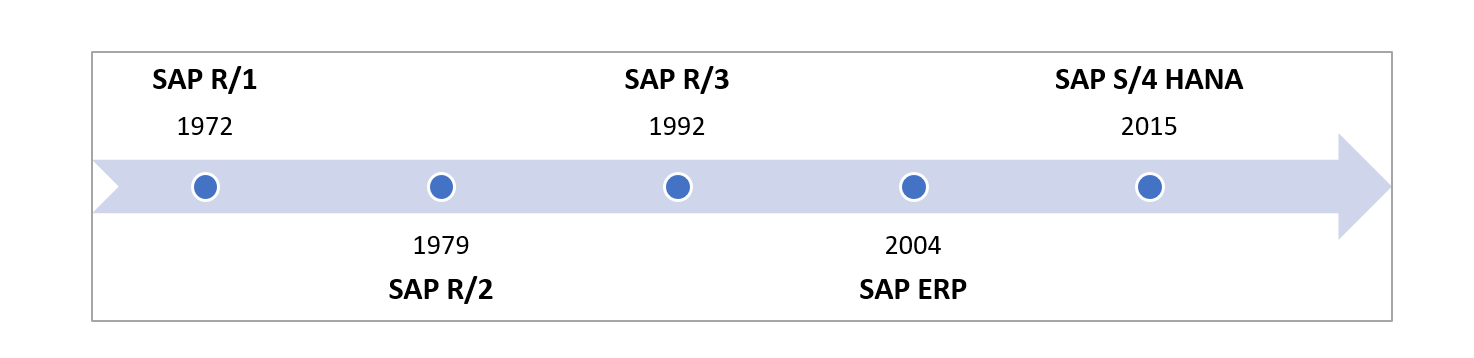
SAP SE, founded in 1972 in Germany, is Europe's largest software company and the global leader in ERP systems. ERP stands for Enterprise Resource Planning - software that manages all business processes: financial accounting, procurement, sales, production, HR, warehouse management. Everything in one system.
Picture a company that manufactures industrial valves. When a customer places an order, SAP triggers an automatic chain reaction: The order is recorded in the sales module, production planning reserves materials, procurement orders missing raw materials, accounting generates an invoice, and controlling books the margin. In the past, you needed five different software systems and endless manual reconciliation. With SAP, it happens automatically - and in real time.
The current generation is called SAP S/4HANA and runs on an in-memory database that processes data orders of magnitude faster than conventional systems. S/4HANA can also incorporate new technologies like artificial intelligence and machine learning - one reason the SAP world and AI consulting are increasingly overlapping.
A few numbers that illustrate why SAP is no niche product: 77 percent of all business transactions worldwide run through an SAP system. 94 percent of the world's 500 largest companies are SAP customers. Over 400,000 organizations use SAP solutions - from Fortune 500 corporations to specialized mid-sized manufacturers with 200 employees.
What does an SAP consultant actually do all day?
The short version: An SAP consultant makes sure the SAP software actually does what the business needs. Sounds simple. It is not.
Imagine you inherit a company. The processes have grown organically over years - dusty, entrenched. The ERP system was implemented ages ago, but the business has changed completely since then. This is where the SAP consultant comes in: analyzing business processes, identifying where the system slows things down instead of speeding them up, and configuring SAP so it fits the current business like a glove.
But the job goes well beyond analysis. I like to compare the SAP consultant to an architect who does not just draw the blueprint but also rolls up their sleeves:
- Process analysis: Working with business departments to examine processes and identify optimization potential
- System configuration: Adapting SAP to the company's specific requirements - organizational structures, master data, posting logic
- Implementation: Introducing new SAP modules or entire S/4HANA systems, including data migration and interfaces
- Training: Getting end users up to speed - from accountants to sales directors
- Support: Being the firefighter after go-live when something does not work, and continuously evolving the system
An SAP consultant permanently works at the intersection of IT and business. You must understand business processes and simultaneously know how to map them technically in SAP. This exact combination is what makes the role demanding - and so well paid.
What types of SAP consultants are there?
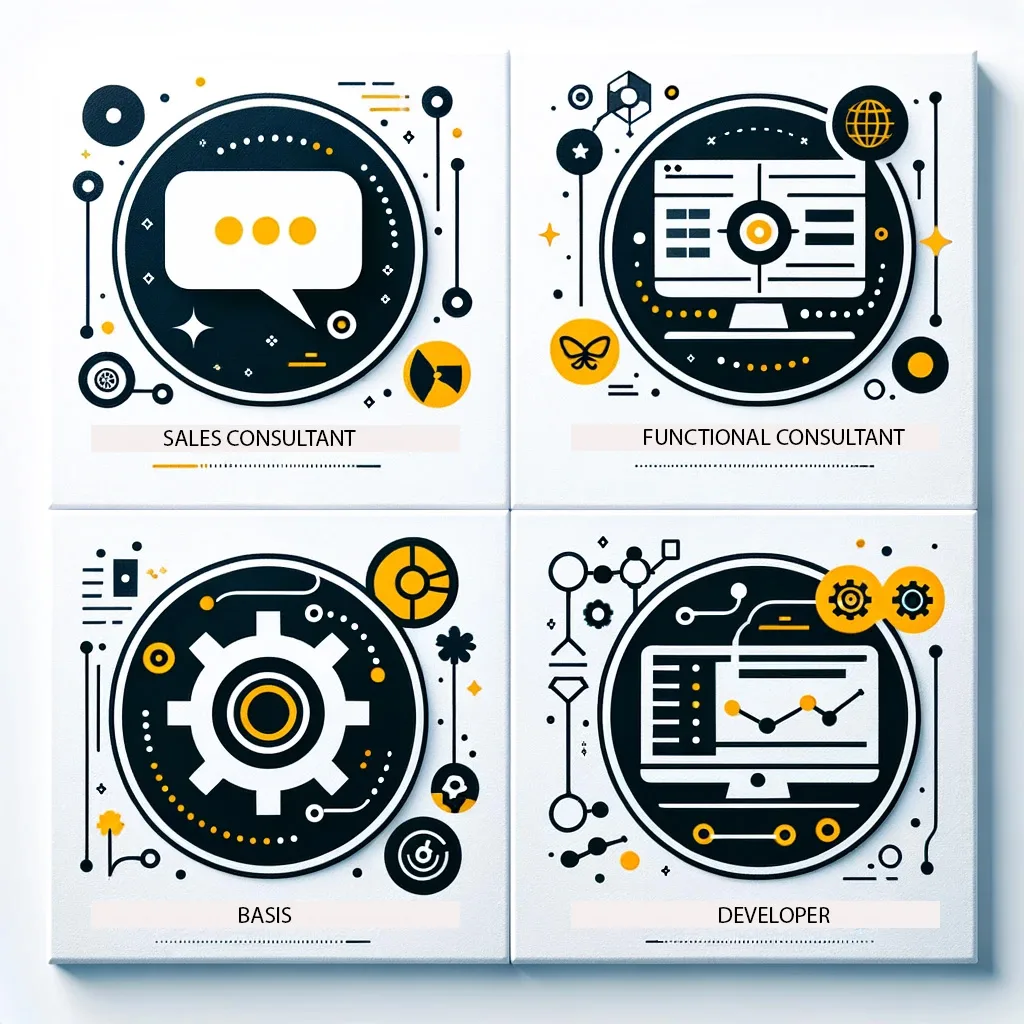
Not every SAP consultant does the same thing. Depending on focus area, there are four fundamental types:
1. Functional Consultant
By far the most common role - and the one where most career changers start. Functional consultants specialize in one or two SAP modules (e.g., FI for Financial Accounting, CO for Controlling, MM for Materials Management) and configure the system to client requirements. They are the translators between business and IT: The accountant explains what they need, and the functional consultant makes SAP deliver it.
2. Technical Consultant / Developer
When standard configuration is not enough, developers step in. They program in ABAP (SAP's proprietary language) or increasingly in JavaScript and TypeScript (for SAP Fiori and UI5). Typical tasks: custom reports, interfaces to third-party systems, complex extensions of standard functionality.
3. Basis Consultant / Administrator
Basis consultants handle technical infrastructure: servers, databases, system landscapes, authorizations, transport management. They ensure the SAP system runs, performs, and stays secure. An often underappreciated role, but indispensable - especially during cloud migrations and S/4HANA conversions.
4. Presales / Sales Consultant
Sales consultants do not need deep module expertise. Their job: win clients and educate them about the benefits of SAP implementation or migration. They create proposals, deliver presentations, and guide the sales process. A good option for strong communicators with foundational SAP knowledge.
Why are SAP consultants more in demand in 2026 than ever?
Demand for SAP consultants is currently at an all-time high. Three main drivers are responsible:
The S/4HANA migration wave
SAP has set the mainstream support deadline for the legacy ECC system (SAP R/3 and SAP ERP) to 2027. This means tens of thousands of companies worldwide must migrate to S/4HANA to continue receiving support, security updates, and new features. In practice, many companies postponed the migration for years - especially during the pandemic. The result is a massive project backlog that is now being released.
For SAP consultants, this means: order books are full. S/4HANA transformation projects take 12 to 36 months depending on company size and require teams of 10 to 100+ consultants. Demand far exceeds supply.
Digitalization pressure
Alongside the migration, many companies want to fundamentally modernize their business processes. S/4HANA offers capabilities the old system lacked: real-time analytics, embedded AI, simplified data models. But these capabilities do not exploit themselves - you need consultants who understand both the old and the new world.
Skills shortage drives salaries
Basic economics: high demand with scarce supply drives prices. SAP consultants with S/4HANA experience can command daily rates of €1,200 to €1,800. Permanent employees with five years of experience reach annual salaries of €90,000 to €120,000. Specialized niche profiles - such as SAP IS-U for utilities or SAP TM for logistics - go even higher.
Anyone entering SAP consulting in 2026 is stepping into a market that is desperately looking for reinforcements. The entry barriers are lower than most people think - the salary potential higher than in most comparable IT roles.
What requirements do I need for SAP consulting?
Good news: You do not need a computer science degree. Many of the best SAP consultants I know come from business administration, business informatics, engineering, or entirely unrelated fields. What you actually need are three core qualities:
1. Understanding of business processes
SAP maps real business processes. If you do not understand how an invoice is posted, how a production order works, or why a company has cost centers, you will struggle with SAP customizing. Basic accounting knowledge is essentially mandatory for the FI and CO modules.
2. Technical aptitude
You do not need to code (unless you want to become a developer). But you must understand how an ERP system is structured: tables, transactions, configuration layers, interfaces. This can be learned - what matters is the willingness to dig into technical details.
3. Communication skills
This is chronically underrated. An SAP consultant spends at least half their time in workshops, alignment meetings, and presentations. You need to be able to explain to a finance director why their desired posting logic is technically impractical - while simultaneously conveying to the development team what the business actually needs. Those who can do this are invaluable.
SAP modules overview
The SAP system is divided into modules, each covering a business area. As a consultant, you typically specialize in one or two:
- SAP FI - Financial Accounting (general ledger, AR, AP, asset accounting)
- SAP CO - Controlling (cost centers, profit centers, profitability analysis)
- SAP SD - Sales & Distribution (orders, deliveries, billing)
- SAP MM - Materials Management (procurement, inventory, invoice verification)
- SAP PP - Production Planning (production orders, BOMs, routings)
- SAP HCM/SuccessFactors - Human Capital Management
- SAP QM - Quality Management
- SAP PS - Project System
- SAP BW/4HANA - Business Warehouse / Data Analytics
For starting out, I recommend FI and CO. Both modules are deployed at virtually every SAP customer and form the heart of the ERP system. Master FI/CO, and you will always have projects.
How do I enter SAP consulting as a career changer?
The path to becoming an SAP consultant is shorter than most people think. No three-year degree, no five-year apprenticeship. With the right plan, you can be ready for your first project in six to nine months. Here is how it works:
Step 1: Choose the right module
Pick a module that matches your background. Experience in accounting or controlling? Go with FI or CO. Logistics background? SD or MM. If you are unsure, start with FI/CO - it is the most universal entry point and demand is enormous.
Step 2: Build a theoretical foundation
Every SAP module has two sides: the end-user view (what the user sees and does) and the customizing view (the technical settings a consultant configures). You need to understand both.
SAP Press (by Rheinwerk Verlag) has established itself as the standard for SAP literature. For FI, I recommend starting with an end-user book, then moving to a customizing book. Budget two to three months for this theory phase if you take it seriously.
Step 3: Get SAP certified
After the theory phase comes certification. SAP offers official certification exams for every module - online or at a training center. The exam is challenging (first-attempt failure rate runs around 30 to 40 percent), but very doable with proper preparation.
Why certification matters: It serves as a recognized "proof of knowledge" in the market and noticeably boosts your marketability. The number of certified consultants is lower than you might expect - passing the exam immediately sets you apart.
Step 4: Gain practical experience at a consulting firm
Theory alone is not enough. The decisive step is joining an SAP consulting firm where you gain real experience as part of a project team. On actual S/4HANA transformation projects at major enterprises, you learn more in six months than in two years of self-study.
At rwQUANTICAL, we also support career changers in developing into SAP consultants. Our consultants receive a structured theory phase with mentoring from experienced senior consultants after joining, followed by guided certification preparation. Then it is straight onto client projects - learning by doing, but with a safety net.
What does an SAP consultant earn in 2026?
The topic everyone wants to know about. Numbers vary by experience, module, and region - but the trend is clear: SAP consulting ranks among the highest-paid IT careers in the DACH region.
Permanent employment - annual salaries
- Junior (0–2 years): €50,000 to €65,000
- Mid-level (2–5 years): €65,000 to €90,000
- Senior (5+ years): €90,000 to €120,000
- Lead/Partner level: €120,000 and up
On top of that come company cars, bonuses, and training budgets. In Switzerland and Austria, salaries tend to run even higher.
Freelance - daily rates
- Junior: €800 to €1,000 per day
- Mid-level: €1,000 to €1,400 per day
- Senior: €1,400 to €1,800 per day
- Niche specialist (IS-U, TM, FI-CA): up to €2,000+ per day
At an average of 200 to 220 working days per year, an experienced freelance SAP consultant can achieve annual revenues of €250,000 to €350,000. Even after taxes, insurance, and reserves, the net income significantly exceeds that of most employed IT professionals.
FAQ: What do SAP consultants cost for companies?
From the buying company's perspective, hourly rates for external SAP consultants range from €110 to €200, depending on experience and module complexity. Rare specializations like SAP IS-U (utilities) or SAP FI-CA (contract account receivables) can go even higher - simply because too few consultants exist.
Bottom line: Is entering SAP consulting still worth it?
Short and direct: Absolutely. More than ever.
The S/4HANA migration wave, ongoing digitalization, and chronic skills shortage create an environment where SAP consultants rank among the most sought-after IT specialists in the DACH region. Entry barriers are manageable, salary prospects are excellent, and job security for the next ten to fifteen years is as high as in virtually any other IT field.
The path is clear:
- Choose a focus module (when in doubt: FI/CO)
- Build a theoretical foundation (2–3 months)
- Pass the SAP certification exam
- Gain practical experience at a consulting firm
- Keep learning - the SAP universe is vast
Following this path means investing in a career that holds up even in an age of AI and automation. SAP systems are not disappearing - they are getting smarter. And that requires consultants who understand both: the ERP system and the business processes behind it.
Interested in starting your SAP consulting career at rwQUANTICAL? Get in touch - we look forward to hearing from you.